
Teacher Training · RYS 200
200-Hour Yoga Teacher Training
The 200h Sundari Integral Yoga © TTC is your gateway into the world of teaching yoga. Grounded in practice, philosophy, and self-discovery, it equips you with the tools to lead others with confidence and authenticity. It gives the basic foundations, theoretical and practical, that are necessary for becoming a professional yoga teacher.
The 200h Sundari Integral Yoga© TTC is your gateway into the world of teaching yoga. Grounded in practice, philosophy, and self-discovery, it equips you with the tools to lead others with confidence and authenticity. It gives the basic foundations, theoretical and practical, that are necessary for becoming a professional yoga teacher.
200 Yoga Teacher Training Course
Benefits
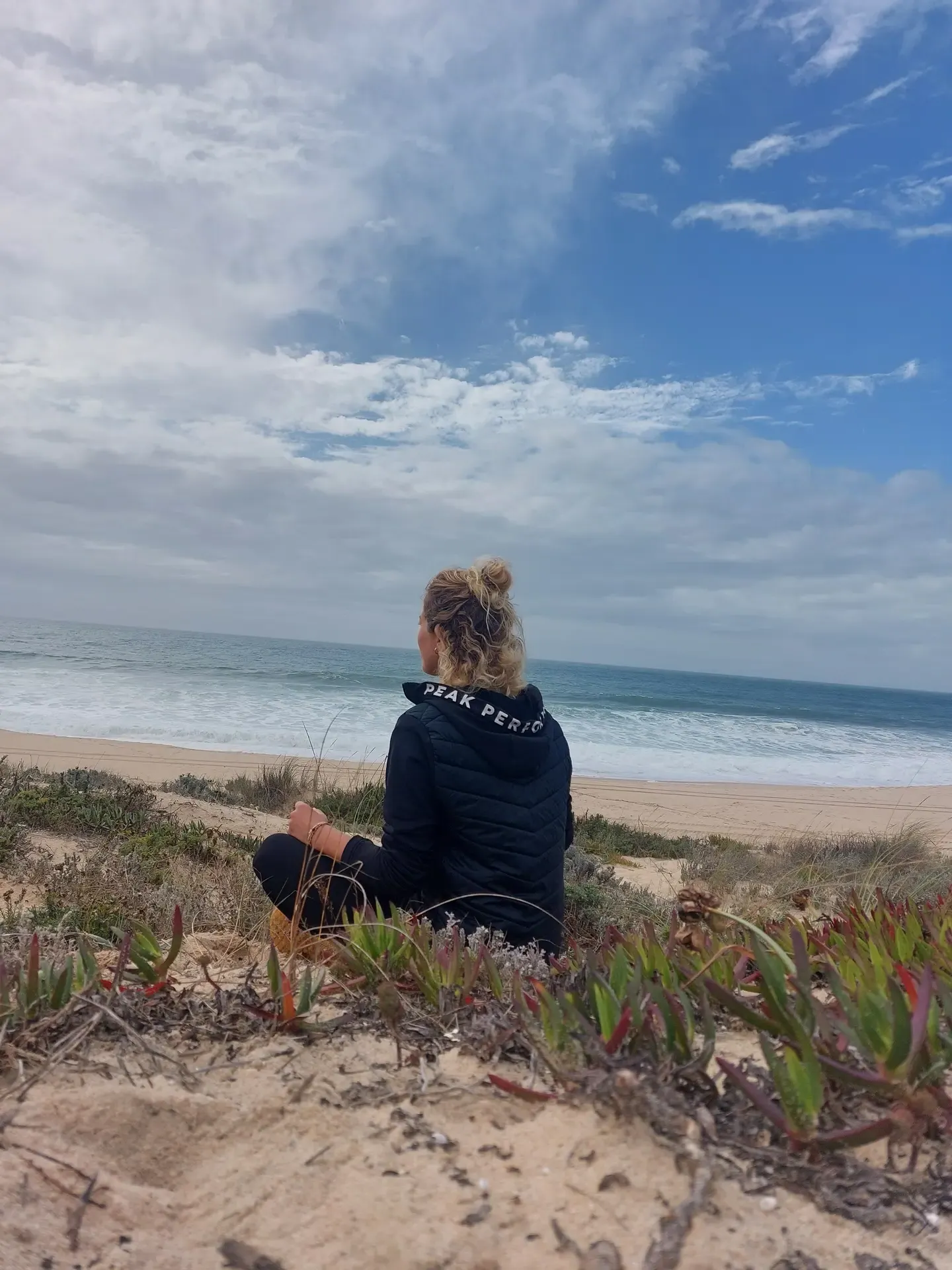
Whilst you will transform your life and fulfil your dream of becoming a Yoga Teacher, in your free time you may enjoy walks on trills through the serenity of the pine forest, toward the blue of the ocean. As an alternative, you may simply enjoy the beach and deep into the lagoon or play with the waves of the ocean.
Immediately upon graduation, you are eligible to register with the most trusted and recognized yoga teaching organization in the world – Yoga Alliance Organisation.
Highlights
• International valid certificate, that allows you to register with Yoga Alliance as a RYT200
• Comprehensive illustrated Yoga Teacher Manual, with more than 550 pages
• Theoretical and practical teaching methodologies for 73 yoga techniques – asana, pranayama, Yoga Nidra, meditation, and more.
• Excellent facilities and location, near the ocean, pine forest and lagoon
• Ovo-Lacto-Vegetarian healthy food
• According to Gurukula tradition (living with the master), the accommodation is freely offered by the Sundari School, in twin bed rooms, with private bathroom.
• Small groups personalised training (max 10 students)
Educational Philosophy
Rather than presenting yoga as a collection of physical techniques, the programme integrates yoga as a complete path of transformation. Students progressively cultivate awareness of the physical, energetic, mental, emotional and spiritual dimensions of the human being while developing the knowledge and confidence necessary to guide others safely and authentically.
Learning Outcomes
Upon successful completion of the programme, you will be able to:
• Establish and maintain a consistent personal yoga practice.
• Design safe and balanced class sequences.
• Teach safe and well-structured yoga classes.
• Teach beginner and intermediate Integral Yoga classes with confidence.
• Demonstrate and explain foundational asanas, pranayama and meditation techniques.
• Guide basic breathing, concentration and meditation techniques.
• Apply appropriate modifications according to individual needs and abilities.
• Understand the essential principles of anatomy and physiology relevant to yoga practice.
• Recognise the essential anatomical and physiological effects of yoga practice.
• Integrate classical yoga philosophy into teaching and daily life.
• Guide students with professionalism, sensitivity and ethical responsibility.
• Integrate yoga as a holistic path of personal transformation and conscious living.
• Continue developing as lifelong yoga practitioner and teacher.
Theoretical Framework of the Course
The curriculum follows the classical eight-limbed system of Yoga, integrating practice, individual study, self-inquiry and teaching experience into one coherent educational journey, structured in five main modules:
Integral Yoga Practice - Asana, Pranayama, Relaxation and Meditation
This module provides the experiential foundation of the training. Students cultivate a personal and disciplined practice through the direct exploration of the traditional yogic techniques while simultaneously learning their energetic, psychological and spiritual dimensions.
• Foundations of Integral Yoga practice
• Body Architecture - Principles of safe and conscious practice.
• Integral Flow - Development of subtle awareness of prana, nadis and chakras.
• Gifts of the pose - Integration of asana-s effects and yoga practice into daily life
Asana Practice
• Fundamental principles of posture practice, alignment and body awareness for 50 postures, grouped in the body/spine alignment categories
• Effects and contraindications
• Safe transitions
• Sequencing principles
• Chakra-oriented approach to asana.
• Alignment, modifications, adaptations and use of props.
• Energetic progression within a practice.
• Warm-up and energetic awakening techniques.
• Surya Namaskar and preparatory practices.
Pranayama
• Foundations of yogic breathing
• Breath awareness
• Abdominal breathing, Complete yogic breathing, Kapalabhati, Anuloma Viloma, Samavritti Pranayama
• Effects and Contraindications
• Bandhas and mudras.
Dharana - Concentration and Dhyana - Meditation Techniques
You establish a regular meditation practice through progressive techniques including
• Tratakam, Ekagrata, Shambhavi Mudra
• Vipassanā, Japa Meditation
• Centring in the Spiritual Heart - Hridaya
• Awareness of the pauses between breaths
• Self-enquiry - Atma-vicara
Relaxation
Practice and teaching of: Savasana, guided relaxation, introduction to Yoga Nidra principles, deep relaxation in Yoga Nidra and visualisation techniques
Yoga Teaching Methodology and Professional Skills
This module develops the pedagogical abilities required to teach safely and confidently.
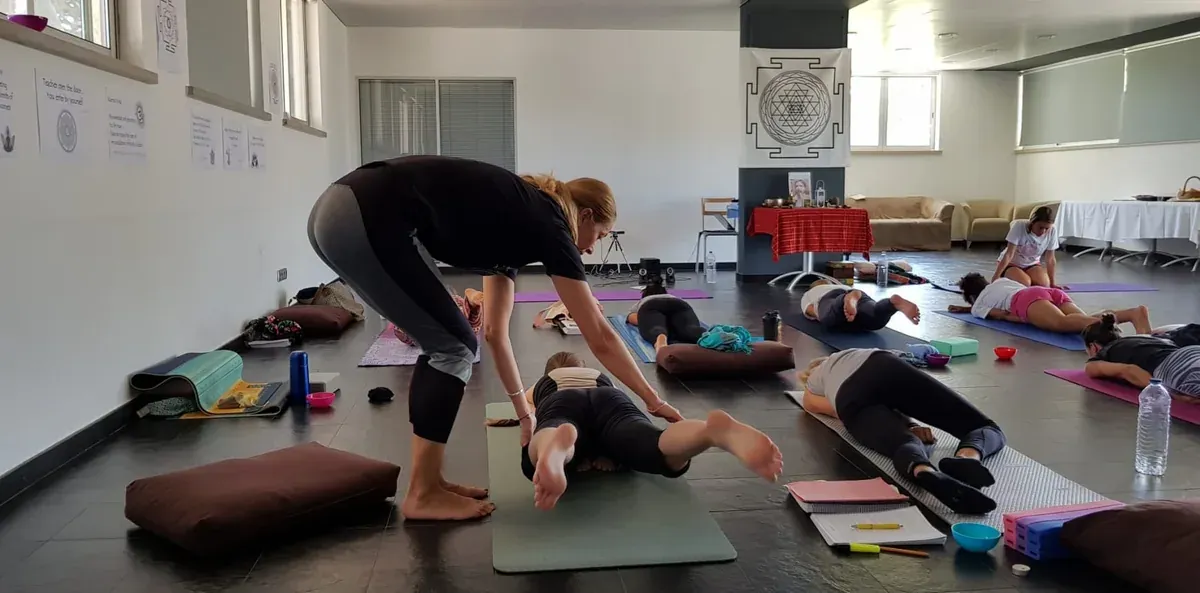
• Principles of effective teaching: teaching styles for yoga teachers, verbal and nonverbal communication in yoga teaching, observation skills, demonstration principle, assisting and adjustments of the yoga techniques.
• Yoga class planning methodology: structuring complete yoga sessions, sequencing according to objectives, integrating philosophy into teaching.
• Group dynamics: teaching yoga to beginners, working with mixed-level yoga groups adapting yoga classes to different populations, individual adaptations, hands-on adjustments
• Ethics: professional boundaries, developing authenticity as a teacher, creating a safe learning environment
Anatomy and Physiology in Yoga Practice
This module provides the scientific and empirical foundations for a practical and functional understanding of the human body. It aims to support a safe teaching and conscious practice.
The module includes:
Functional Anatomy
• Introduction to anatomical terminology and movement principles, Skeletal system., Muscular system, Fascia and connective tissue.
Physiology
• Respiratory system, Cardiovascular system, Nervous system, Digestive system, Endocrine system.
Yoga and Health
• Biomechanics of asana and joint stability.
• Spine mechanics
• Pelvic alignment
• Functional anatomy applied to yoga postures.
• Injury prevention.
• Common postural imbalances
• Safe modifications
• Contraindications
• Anatomical and Physiological benefits and effects of each one of the asanas and yoga techniques included in the curriculum
• Stress physiology
• Relaxation response
• Anatomical observation in teaching.
• Breathing physiology and its relationship with the autonomic nervous system.
• Effects of yoga on health and wellbeing.
Yoga Philosophy, Psychology and Ethics
This module introduces and explores the philosophical, spiritual and psychological foundations of Yoga as a path of Integration and self-transformation.
Classical Yoga
• History of Yoga
• The four main types of Yoga: Karma, Bhakti, Jnana, Raja
• Major schools of Yoga
• The Eight Limbs of Yoga
• Prana
• Nadis
• Chakras
• The Pancha Kosha model.
• Karma and Dharma
• Jiva, Jivatma, Atman
Integral Yoga
• Sri Aurobindo’s concept of Integral Yoga
• Integration of body, mind and spirit
• Mind seen from Sri Aurobindo’s perspective
• Self-awareness
• Spiritual practice in daily life
Psychology
• Patanjali and the mind concept
• States of consciousness.
Ethics
• Teacher-student relationship
• Professional ethics
• Integrity
• How to develop a yoga community
• Respect for tradition
• Personal responsibility
Practicum - Yoga Teaching Practice
This module allows students to integrate theoretical knowledge into direct supervised teaching practice.
• Observation of experienced teachers
• Practice teaching
• Peer teaching
• Teaching full classes
• Practical demonstrations
• Written reflections
• Self-assessment
Assessment
• Continuous attitude of seriousness, genuine interesse in learning, respect for the traditional yoga teachings, teachers, and colleagues
• Individual feedback
• Final practical evaluation
• Final four hour written exam
Successful completion demonstrates readiness to teach beginner and mixed-level Integral Yoga classes safely and professionally.
All the teaching of the course is synthesised in a complete illustrated Integral Yoga Teacher Manual of approximately 550 pages, which contains all the necessary theoretical and practical information for becoming a good Integral Yoga teacher!
The manual is available in English, Franch and Portuguese.
Typical daily schedule
• 08:00 Basics of practice/practicum
• 10:30 Break
• 11:00 Basics of practice/theory modules
• 14:00 Lunch
• 15:00 Karma yoga
• 15:30 Break
• 17.30 Individual study/practicum
• 19:00 Dinner
• 20:00 Basics of concentration/meditation
• 22:00 Noble silence - Good night and Mauna – noble silence
Sundays are off.
The schedule may suffer alterations, depending on the specific circumstances at the time of the program.
Language, group, level
21 days with instruction in English
Spoken languages: English, Portuguese, French
The maximum participants in the group is 10
Exist also the possibility of one-to-one personalised training
Certification
After you complete the training, you are immediately eligible to register with Yoga Alliance as Registered Yoga Teachers – RYT200. Registration with Yoga Alliance provides an international recognized credential. The certificate confirms that you have sufficient knowledge and practical skills for teaching Integral Yoga to future yoga practitioners, for beginner and intermediate level groups.
Please note that the certificate is making you eligible to individually register with Yoga Alliance as a 200 Registered Yoga Teacher – RYT 200. RYT-200 students who also complete a 300-hour yoga teacher training are able to register with Yoga Alliance as a RYT 500.
Requirements
• Minimum 18 years old. There is no upper age limit.
• It can be subscribed by people who have never practised yoga. However, the practice of yoga involves a high level of self-discipline and interior purity.
• Does not require any certification of previous courses.
• For the entire duration of the course there are prohibited: the consumption of drugs, alcohol, tobacco, coffee, black tea and indecent behaviours. Coffee or black tea may be substituted, if need it, with decaf coffee, barley coffee drink or plants tea infusions.
• The meals are ovo-lacto-vegetarian for all the period of the course.
• To participate in the practical classes, students need a comfortable tracksuit, natural fibber socks, a beach towel and slippers for the interior of the house
• This TTC is designed according with the Gurukula tradition. In this tradition, the students are living together with their yoga masters/teachers, forming a harmonious small sangha community, where yoga practice is shared together. This includes also Karma yoga, the yoga of detached action. Part of the Karma yoga program is related to Tapas and Saucha (discipline and purity), so the students have to keep their rooms and their common spaces clean. These are simple common-sense activities that, when well-shared and organised, may take between 20 to 30 minutes per day.
Offer of Dao Yin workshop
Dao Yin Yang Sheng Gong is a modern Qi Gong style that combines Dao Yin's methods with physical exercise and mental cultivation, guiding and inducing the free flow of Chi (internal energy) inside the body.
The workshop is held by Dr. Eugen Mario Manole (PhD) who trained and studied, amongst others, with Professor Zhang Guangde, the Founder of the health system Dao Yin Yang Sheng Gong and Master Yuan Xiu Gang in Wudang mountains. Eugen is teaching Qi Gong and Tai Chi, and he is a YA-registered yoga teacher (RYT500) and YACEP.
Add-On Wellness Experiences
To deepen your journey, we offer personalized add-ons designed to support your growth and wellbeing. These optional experiences can be integrated into your Teacher Training or Retreat program, creating a truly holistic path of transformation.
Available on request:
• Acupuncture Treatments — Restore balance and stimulate the body’s natural healing energy.
• Integrative Therapies — A blend of holistic approaches tailored to your individual needs.
• Yoga Therapy — Personalized sessions that adapt yoga practices for healing, alignment, and inner balance.
These extras are thoughtfully curated to complement your training or retreat, giving you the space to recharge, realign, and expand on every level—body, mind, and spiritual.
Begin your path
Upcoming trainings
Our teacher trainings run on scheduled dates with small, personalised groups. Apply early to secure your place.
200-Hour Intensive Yoga Teacher Training & Dao Yin-Qigong Workshop
5 Oct 2026 – 25 Oct 2026 · Sesimbra, Portugal
200-Hour Intensive Yoga Teacher Training and Dao Yin-Qigong Workshop
2 Nov 2026 – 22 Nov 2026 · Lagoa de Albufeira, Sesimbra
200-Hour Intensive Yoga Teacher Training & Dao Yin-Qigong Workshop
2 Nov 2026 – 22 Nov 2026 · Lagoa de Albufeira, Sesimbra
200-Hour Intensive Yoga Teacher Training and Dao Yin-Qigong Workshop
30 Nov 2026 – 20 Dec 2026 · Lagoa de Albufeira, Sesimbra