
Daoist Arts
Qigong
A Practice for Everyone. Whether approached as gentle exercise, a method of healing, or a spiritual path, Qigong offers a way to restore balance in a world that often pulls us out of harmony. Its simplicity makes it easy to begin, yet its depth allows for a lifetime of exploration.
Cultivating Vital Energy
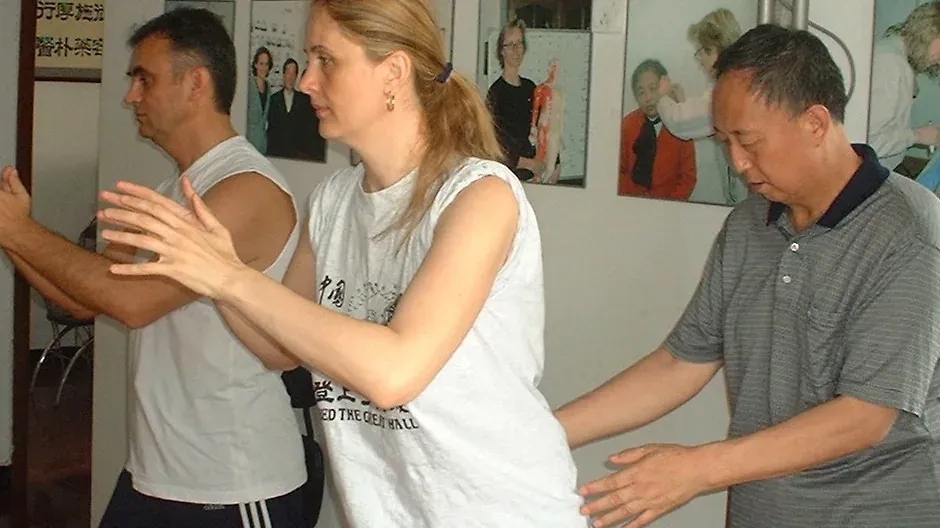
At Sundari we offer you the practise of Dao Yin or Daoist Yoga, a series of exercises practiced by Daoists to cultivate Qi, the internal energy of the body. The relaxed movement, together with a fluid and continuous attention on the body, its energies and its connection with the energies of the environment, produces health and well-being.
The practice of Dao Yin was a precursor of Qigong and was practiced in the Chinese Daoist monasteries for health and spiritual cultivation. Tao Yin is also taught today under the name of “Daoyin Yangsheng Gong” at the University of Physical Education from Beijing.
Qigong Concepts
Qigong is an ancient art of harmonizing body, breath, and mind through gentle, mindful movement. The word itself means “skill with energy,” and its purpose is to cultivate Qi, the vital force that animates all life. Unlike strenuous exercise, Qigong is low-impact, accessible to people of all ages and health conditions, and can be practiced standing, sitting, or even lying down.
Its roots reach deep into Daoist philosophy and the classics of Traditional Chinese Medicine (TCM), which describe Qi as the current of life that flows through the body’s meridians.
One of the guiding principles of practice is expressed in the Daoist saying:
“Use the mind to guide the Qi, and use the Qi to move the body.”
Origins and Lineage
Qigong evolved from Dao Yin the energy-guiding exercises practiced in Daoist monasteries for health and spiritual cultivation. These early forms later inspired what we now call Qigong.
The Experience of Practice
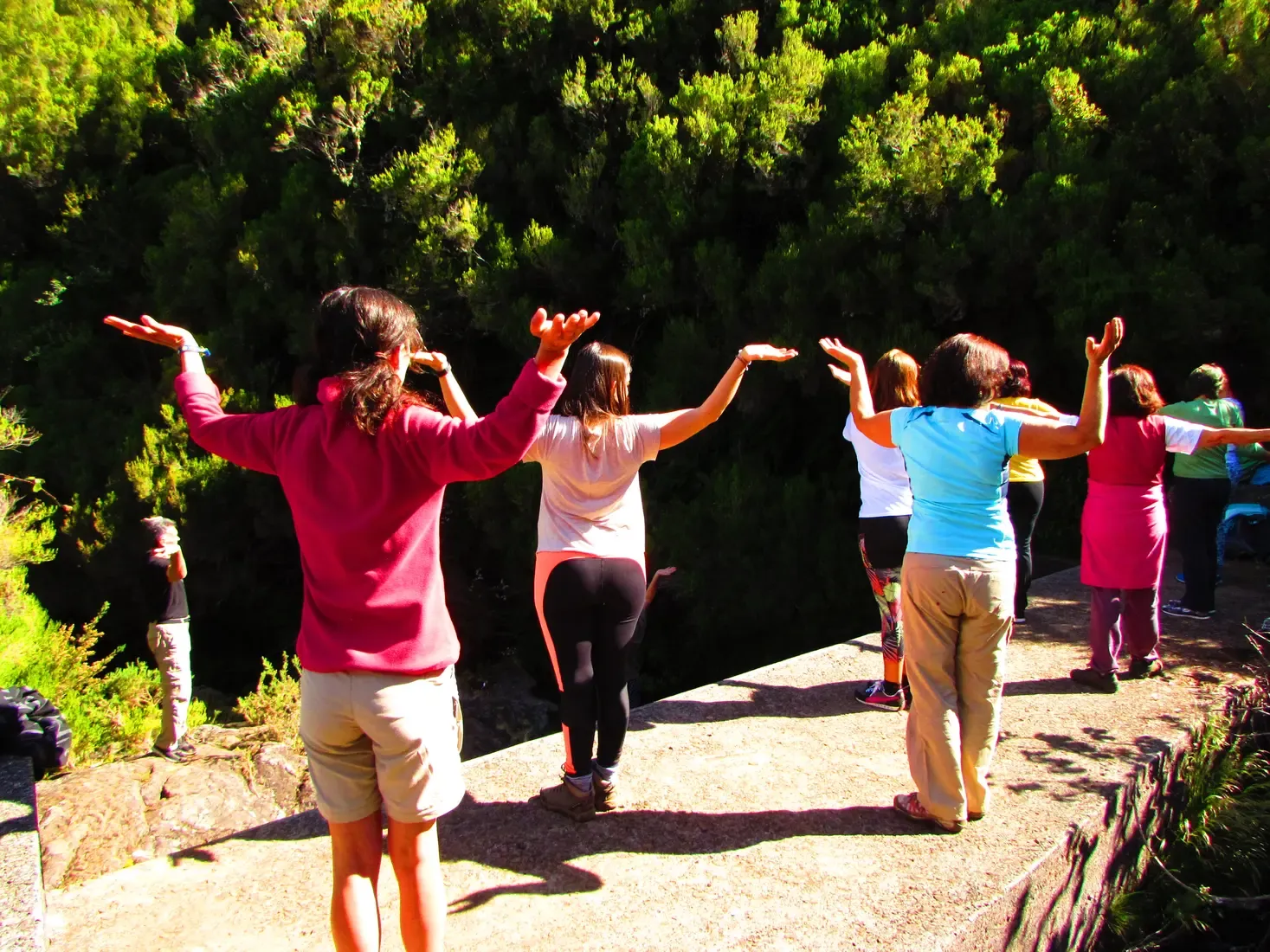
Qigong is not about force or speed, but about relaxation, presence, and flow. Movements are performed with soft, natural breathing and a continuous awareness of the body’s sensations and its connection with the surrounding environment. Over time, this mindful engagement opens the body, calms the mind, and nourishes the spirit.
Benefits of Qigong
Modern research and centuries of experience confirm the wide-ranging benefits of Qigong
• Physical Health: Improves circulation, posture, flexibility, and balance; strengthens the immune system; supports recovery and longevity.
• Mental and Emotional Well-being: Reduces stress, anxiety, and fatigue; sharpens focus; enhances emotional stability.
• Energy and Vitality: Promotes a sense of vitality and resilience by clearing blockages in the body’s energy pathways.
• Spiritual Cultivation: In Daoist, Buddhist, and Confucian traditions, Qigong is also a gateway to higher states of awareness, self-discovery, and harmony with the Dao—the natural order of life.
Practise with us
Join a class
These classes are part of the regular rhythm of life at Sundari. Get in touch to find the next session, or join us on a retreat for a deeper immersion.